What is the difference between a refresh and a replacement?
| Decision | Kitchen refresh | Full replacement |
|---|---|---|
| Cabinet structures | Retained where suitable | Existing units removed and new units fitted |
| Layout | Usually retained | Can stay the same or be redesigned |
| Typical scope | Selected doors, hardware, worktops, tap or finishes | Units and worktops, with other items specified separately |
| Services | Limited changes where the scope allows | More changes if appliance or sink positions move |
| Disruption | Depends on how many items are changed | Includes removal and a broader installation sequence |
| Main limitation | Cannot correct unsuitable retained components | Higher commitment of work, materials and coordination |
“Full replacement” does not automatically mean that appliances, tiling, flooring or decoration are included. The written quotation needs to define them.
Check the existing kitchen before choosing new doors
Open cupboards and drawers. Look for swollen board, loose joints, damaged hinge positions, sagging shelves and movement in the cabinet structure. Pay particular attention to the sink area and places beside water-connected appliances.
Check dimensions and compatibility before ordering replacement fronts. A door that looks similar can have different hinge positions, thickness or clearances. End panels, plinths and exposed cabinet edges also affect the finished appearance.
Worktops need their own assessment. Removing a worktop may disturb the sink, tap, tiled edge or splashback. Some existing components may not survive removal intact. Ask what happens if hidden damage is exposed and how additional work will be approved.
When a targeted refresh makes sense
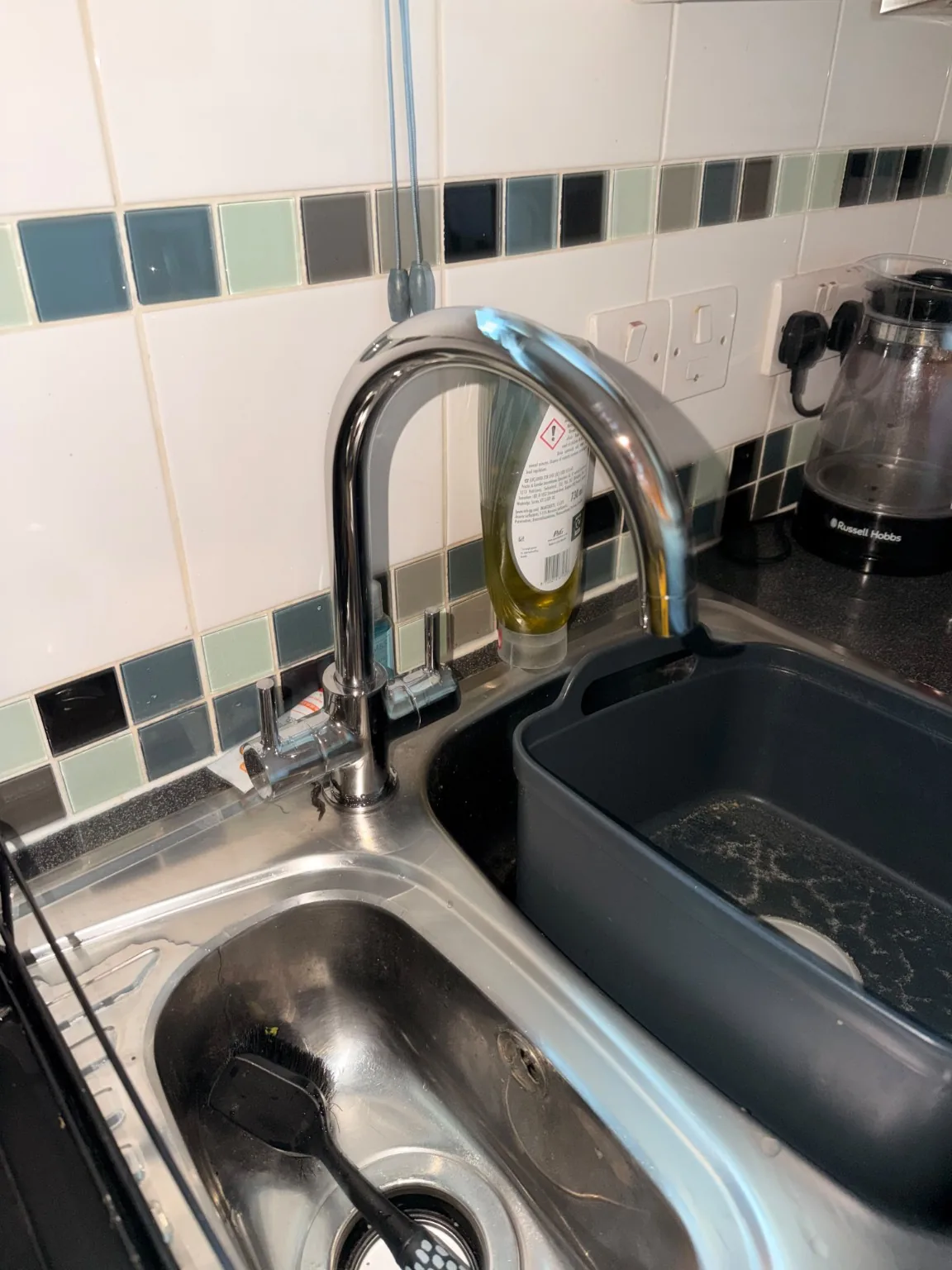
A refresh can be a suitable option when you like the room’s arrangement and the retained components are serviceable. The work might involve adjusting doors, replacing damaged hardware, renewing a tap, changing compatible fronts or fitting a new worktop.
In our Woodston kitchen tap, plumbing and shelving project, the work covered a replacement tap, associated plumbing and two shelves. This illustrates a targeted improvement to an existing room, rather than a complete kitchen refit.
For a rental property, write down the actual problems first. A faulty drawer and worn tap are different decisions from several water-damaged units. Specifying the defects helps avoid buying a whole kitchen when a smaller scope would address the need.
When replacement deserves serious consideration
Compare replacement options if damage is widespread, suitable replacement parts are unavailable or the layout needs substantial changes. Limited worktop space, awkward appliance access and poorly arranged storage may not be solved by fitting new doors.
Replacement also creates an opportunity to coordinate the room’s services and finishes. That does not mean every pipe, cable or appliance must be changed. Ask the relevant trades to assess what can remain and what needs alteration.
If the work involves a wall opening, structural changes or changes to a flat’s shared services, establish the necessary permissions and professional input before agreeing the installation programme.
Compare the total cost of the same scope
The Federation of Master Builders’ kitchen planning guide identifies size, specification, materials, appliances, installation and location as factors affecting cost. It also describes retaining suitable carcasses and replacing doors as a possible refurbishment approach.
For a useful Peterborough quotation, ask for these items to be addressed explicitly:
- Units, fronts, panels, handles and internal fittings.
- Worktops, joints, cut-outs, sink and tap.
- Appliance supply, installation and any specialist connections.
- Plumbing, electrical work and ventilation changes.
- Removal, waste disposal and protection of retained finishes.
- Wall repairs, tiling, flooring and decoration.
- Testing, certification where applicable and final adjustments.
- VAT, exclusions and the process for agreeing variations.
Hypothetical arithmetic example only — not 360 prices or local market averages. The following numbers are an arithmetic illustration only, not Peterborough market averages or a quotation from 360. Suppose a refresh quote is £3,000 including VAT, with £900 of necessary additional work: its comparable total is £3,900. If a replacement quote is £6,800 including VAT but excludes £1,200 of appliances you need, its comparable total is £8,000. The difference is £4,100, not the £3,800 gap between the headline figures.
Then compare what each option leaves you with. A cheaper refresh that retains failing cabinets may not solve the problem. A replacement with features you do not need may be unnecessary expenditure. The decision depends on condition, specification and your planned use of the property.
Plan for disruption as well as installation time
Ask when the sink, cooker and washing machine will be unavailable, not just how many days a fitter expects to attend. Material delivery, worktop templating, drying periods and visits from separate trades can affect the elapsed programme.
For an occupied home, agree a safe temporary arrangement for meals, washing up, children and pets. In a flat, confirm deliveries, parking, working hours, lift access and protection of communal areas with the appropriate building contact.
For a vacant rental, schedule cleaning and the final inspection after dusty work and fitting adjustments. Avoid confirming a new occupier’s access based solely on an estimated installation duration.
Gas connections must be handled by a suitably qualified Gas Safe registered engineer. Use competent electrical trades and agree which documents the work requires. A kitchen fitting quote should identify these responsibilities rather than leave them implicit.
Send kitchen photographs and request a quote. For a wider installation overview, see our kitchen planning and fitting guide.