Your quick winter maintenance checklist
- Look for overflowing gutters, leaking joints and blocked downpipes.
- Check the roof from ground level for visible damage.
- Identify exposed water pipes and check their insulation.
- Locate the internal stop tap and keep it accessible.
- Test the heating using its normal controls.
- Look beneath sinks and around radiators for leaks.
- Check extractor fans and keep designed ventilation openings clear.
- Check external doors, windows, paths and gates.
- Test smoke and carbon monoxide alarms following their instructions.
- Make a separate winter plan for any empty property.
Record each issue with a photograph, its location and whether it changes when it rains or the heating runs. That information makes a repair enquiry more useful than a general request to “check the house”.
Check gutters and the roof before redecorating damp patches
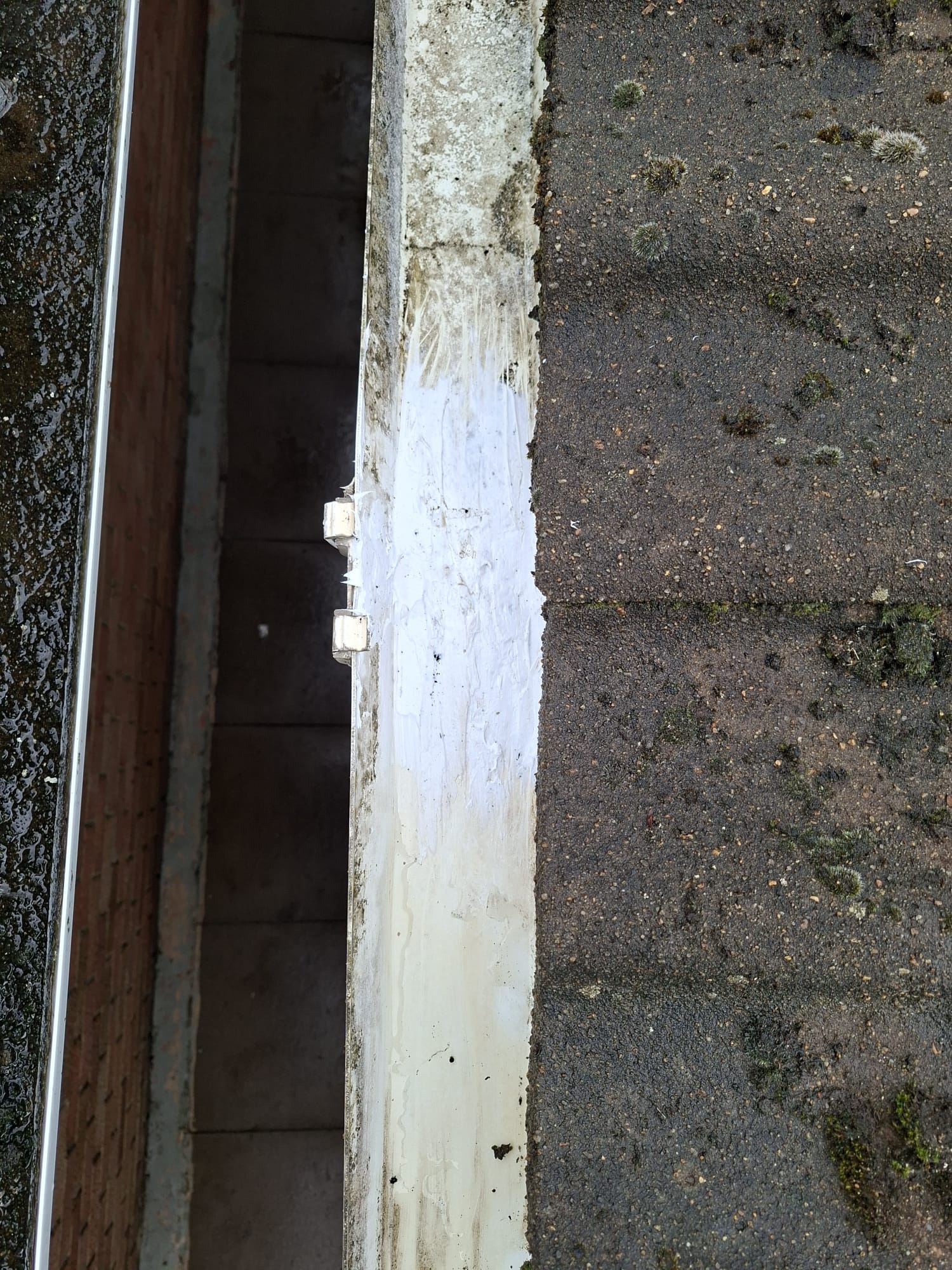
Observe gutters from a safe position during rainfall. Note where water spills over the edge or escapes at a joint. Check whether a downpipe is detached or discharging where it should not. A blockage and a failed joint need different repairs.
Look from ground level for visibly displaced roof coverings or damaged flashing. Do not climb onto a roof or use a ladder in wet, icy or windy conditions. Ask a suitable contractor to assess high-level defects.
The Met Office’s winter property guidance includes roof checks and gutter clearance among its preparation tasks. These checks can identify routes for rainwater to enter before internal finishes are repaired.
Our gutter cleaning and joint repair in Stanground shows a local example of cleaning and repairing an existing gutter. A leaking joint does not, by itself, establish that an entire gutter run needs replacement. For a similar problem, see our Peterborough gutter cleaning and repair service.
Protect exposed pipes and know how to isolate water
Check accessible pipework in unheated areas, such as garages and outbuildings, for missing or damaged insulation. Outside taps also need suitable frost protection. Ask a plumber about isolation and draining where an external supply will not be used over winter.
Find your internal stop tap before an emergency occurs. Keep the route to it clear, and arrange attention if it is seized or leaking rather than forcing it. In flats, identify which valve serves your own home and who manages shared supplies.
Anglian Water’s winter guidance recommends protecting exposed pipework and locating the stop tap. If a pipe bursts, isolate the water if you can do so safely and arrange help. Keep away from water near electrical equipment.
Check heating before you depend on it every day
Run the heating using the normal user controls. Note rooms that remain cold, radiators that leak, unusual noises and any boiler fault code. Photograph the display and record the boiler make and model before contacting a contractor.
Use the appliance manual for user checks. Do not remove the boiler casing or attempt gas repairs. Gas work must be carried out by an appropriately qualified Gas Safe registered engineer. A boiler service and a landlord gas safety check serve different purposes; ask which work is included when booking.
Check for dampness beneath radiator valves and around accessible heating pipework. A slow leak may be easier to identify when the system is operating, but do not touch hot components or attempt to tighten them while hot.
Keep ventilation working while reducing draughts
Uncontrolled draughts and designed ventilation are different. Repairing a damaged window seal can improve comfort, but blocking trickle vents or air bricks can interfere with ventilation.
Use kitchen and bathroom extractors as intended. Check that accessible grilles are clean and report fans that do not run or seem ineffective. Never cover ventilation required for a combustion appliance.
Energy Saving Trust’s ventilation advice explains that moisture needs a route out of the home, including during winter. Persistent condensation or recurring mould needs investigation; repainting alone does not address the cause.
Take note of where damp appears. A patch that worsens after rain, moisture below a pipe joint and condensation on cold glazing are different observations. They help guide an inspection but do not prove a diagnosis on their own.
Check access and security
Walk the route from the pavement to the entrance. Look for unstable paving, standing water, loose handrails and poorly lit changes in level. Note whether the gate catches or the entrance door fails to close properly.
Check windows and external doors using their normal operation. Report damaged handles, failed locks and obvious water entry. In a block of flats, report communal defects to the managing agent or responsible person rather than altering shared fittings yourself.
Keep external gullies free of accessible surface debris where this can be done safely. Do not enter drains or lift heavy covers to investigate a blockage.
Give empty rental properties a separate winter plan
For a vacant Peterborough rental, agree who will visit, how often they will inspect and who can authorise repairs. Record the insurer’s unoccupancy conditions rather than assuming the occupied-home cover continues unchanged.
Ask an appropriate contractor about frost protection or draining arrangements for that particular plumbing and heating system. Switching everything off without a plan may leave water-filled pipes exposed to freezing.
Keep a simple visit record: date, heating status, visible leaks, security, meter observations and any action taken. Before occupation, complete the relevant safety and handover checks as well as seasonal maintenance.
Request a winter maintenance quote. For a rental portfolio, see our landlord maintenance service.